Saving Our Rural Hospitals: Inside the Healthcare and EMS Challenges in Georgia House District 157

Across rural Georgia, nine rural hospitals ceased operating inpatient services between 2010 and 2023, according to tracking by the Cecil G. Sheps Center for Health Services Research. As documented by the U.S. Government Accountability Office (GAO-21-93), rural hospital closures directly increase travel distances for patients, with the median distance to access general inpatient care increasing by approximately 20.5 miles in studied rural service areas. When a community loses local inpatient capacity, residents must travel substantially farther for acute medical interventions.
Here in Georgia House District 157 - covering Appling, Evans, Jeff Davis, and Tattnall Counties - our local medical providers face these economic pressures every single day. While our four counties generate hundreds of millions of dollars in farm gate and forestry value annually, the local property tax bases supporting rural county services are tightly constrained, leaving community emergency and healthcare operations on narrow operating margins.
To understand the healthcare choices before voters in the 2026 General Election, we need to examine the ground-level facts: the operational condition of our local facilities, the state tax programs designed to help them, and the legislative priorities required under the Gold Dome to protect access to care.
The Hospitals Serving District 157
While residents across District 157 rely on regional healthcare systems in Statesboro, Waycross, and Douglas for specialty services, and travel to Memorial Health University Medical Center in Savannah for Level 1 trauma care, our immediate safety net rests on three independent community hospitals located within or adjacent to the district.
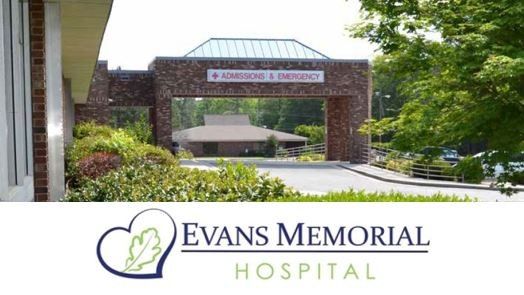
1. Evans Memorial Hospital (Claxton, Evans County)
Located in Claxton, Evans Memorial Hospital is a 49-bed acute care facility that provides primary emergency, diagnostic, and acute inpatient services for Evans County and neighboring Tattnall County residents.
- Operating Realities: Operating in a rural market with a high percentage of Medicare and Medicaid coverage, the hospital has faced recurring operating deficits. In 2020, to ensure the facility maintained sufficient operating liquidity to meet vendor accounts payable and payroll, the Evans County Board of Commissioners approved an emergency cash contribution of $50,000 per month.
- Service Line Adaptations: Financial constraints forced the hospital to end inpatient labor and delivery services in 2010, requiring expectant mothers in Evans and northern Tattnall Counties to travel to Statesboro or Savannah for delivery. To help stabilize clinical cash flow and address unmet regional behavioral health needs, Evans Memorial opened a 10-bed geriatric behavioral health unit in 2017, utilizing specialized Medicare reimbursement categories designed for senior inpatient psychiatric care.
2. Jeff Davis Hospital (Hazlehurst, Jeff Davis County)
Serving the western portion of District 157, Jeff Davis Hospital in Hazlehurst is designated as a 25-bed Critical Access Hospital (CAH):
- Emergency Stabilization Hub: The hospital operates a 24-hour emergency department staffed in partnership with SouthlandMD, alongside an Intensive Care Unit and swing beds for post-acute physical rehabilitation.
- Geographic Travel Realities: From Hazlehurst, the nearest alternative emergency departments require significant travel: approximately 20 miles north to Meadows Regional Medical Center in Vidalia, 31 miles south to Coffee Regional Medical Center in Douglas, or 48 miles southeast to Memorial Satilla Health in Waycross. Jeff Davis Hospital provides the immediate, local emergency stabilization and diagnostic triage that county residents depend on before any transfer is considered.
3. Appling Healthcare (Baxley, Appling County)
Located in Baxley, Appling Healthcare operates a 34-bed acute-care hospital alongside a 30-bed Senior Care Unit for geriatric behavioral health (64 licensed beds total), providing 24/7 emergency care, outpatient surgical services, imaging, and primary care clinics for Appling County families.
- Payer Mix Realities: Like its sister facilities in Claxton and Hazlehurst, Appling Healthcare operates in an area where a significant share of patients are uninsured or covered by government healthcare programs with reimbursement schedules that do not cover the full cost of clinical care. Maintaining round-the-clock emergency room staffing and diagnostic equipment requires constant fiscal diligence.
State Support: The Qualified Rural Hospital Organization (RHO) Tax Credit
The primary state-level policy mechanism supporting rural hospitals is the Qualified Rural Hospital Organization Expense Tax Credit (O.C.G.A. § 48-7-29.20), commonly referred to as the Rural Hospital Tax Credit and administered with organizational support from the Georgia HEART Hospital Program.
Enacted in 2017, the program allows Georgia individual taxpayers, married couples, and corporations to make charitable contributions directly to qualified rural hospitals and receive a 100 percent state income tax credit in exchange, subject to statutory limits.
| Program Period | Annual Statutory Cap | Program History & Statutory Framework |
|---|---|---|
| 2017 - 2022 | $60 Million | Initial statutory cap established under O.C.G.A. § 48-7-29.20 |
| 2023 - 2024 | $75 Million | General Assembly increases statutory cap to meet rural hospital demand |
| 2025 - 2026 | $100 Million | Cap expanded to $100 million annually under legislative amendments |
How the Program Operates in Practice
It is important to understand the actual mechanics of the tax credit program:
- Preapproval and Donation Process: Rather than directly redirecting state tax revenue, the program operates through individual and corporate contributions. Eligible taxpayers must apply to the Georgia Department of Revenue (DOR) for preapproval before making donations, subject to individual and corporate statutory limits.
- Preapprovals vs. Reported Contributions: While the annual statutory cap was raised to $100 million starting in 2025, reaching the cap depends on private taxpayer participation. In the Georgia Department of Revenue’s September 17, 2026 report, approximately $53.97 million in tax credits had been preapproved statewide for the calendar year. DOR emphasizes that preapprovals represent authorized potential credits; actual funds flow to hospitals only after donors remit their payments and contributions are reported to the state.
- Local Hospital Eligibility: All three primary medical facilities serving District 157 - Evans Memorial Hospital, Jeff Davis Hospital, and Appling Healthcare - are certified as eligible rural hospital organizations under Georgia Department of Community Health (DCH) guidelines, and state records confirm that all three have active preapprovals and recorded contributions for 2026.
- State Economic Evaluation: A 2025 program evaluation conducted by the Fiscal Research Center for the Georgia Department of Audits and Accounts (DOAA) under O.C.G.A. § 28-5-41.1 estimated $79.5 million in forgone state tax revenues for FY 2025, alongside 232 program-associated jobs and $25.8 million in added value to the state economy. While the audit noted that the tax credit creates a net negative fiscal return from a statewide budgetary perspective, it concluded that program funding provides indispensable operating liquidity that helps participating rural hospitals maintain financial viability and reduce closure risk.
Across Georgia, participating rural hospitals have used these contributions to upgrade diagnostic radiology systems, replace aging HVAC units in surgical suites, service critical equipment leases, and pay down medical supply vendor accounts.
Emergency Medical Services: Disentangling the Rural Transit Crisis
Ensuring local healthcare access is not solely about hospital doors; it depends equally on the emergency transit system that carries patients to those doors. Discussions around emergency medical services involve three distinct challenges that must be evaluated separately:
1. Station Proximity: “Ambulance Deserts”
According to data compiled by the American Ambulance Association (AAA) in its Georgia snapshot, 102 of Georgia’s 159 counties (64.2 percent) contain census tracts classified as “ambulance deserts” - defined as residential areas located 25 minutes or more from the nearest licensed EMS station.
While this is a statewide metric, the reality across District 157 reflects the broader rural geographic challenge: Appling, Evans, Jeff Davis, and Tattnall Counties cover expansive land areas, meaning driving distances from county EMS base stations to rural homesteads and agricultural tracts naturally result in longer travel windows than in suburban settings.
2. Operational Economics and Staffing
Rural county EMS departments face severe budgetary pressures:
- Reimbursement Shortfalls: Federal Medicare and Medicaid reimbursement schedules frequently do not match the complete operational expense of maintaining dedicated rural crews, fuel, specialized vehicle maintenance, and advanced life support (ALS) equipment across low call-volume rural territories.
- Paramedic Retention: Rural county commissions operate under tight local tax digests, making it difficult to match hourly wages offered by metropolitan EMS agencies or private transport services in Savannah or Macon, resulting in ongoing crew recruitment and retention challenges.
3. Ambulance Patient Offload Time (APOT)
A third operational metric is Ambulance Patient Offload Time (APOT) - the elapsed time from when an ambulance arrives at an emergency department until care of the patient is formally transferred to hospital personnel.
The clinical target established by the Georgia Department of Public Health (DPH) is 20 minutes or less. In DPH Region 9 (Southeast Georgia), early 2026 reporting recorded an 81 percent compliance rate within 20 minutes and a regional 90th percentile offload time of 26 minutes.
State records show that the community hospitals directly serving District 157 perform exceptionally well on this measure, with 90th percentile offload times of 3 minutes at Appling Healthcare, 9 minutes at Evans Memorial Hospital, and 7 minutes at Jeff Davis Hospital. The operational concern for rural county EMS occurs when ambulances are dispatched on long-distance emergency transports to larger regional medical centers outside the district, where emergency department volume can create transfer delays that keep rural crews away from their home county coverage areas.
A 4-Point Legislative Action Plan for District 157
Addressing the structural challenges of rural healthcare requires practical, targeted legislation in the Georgia General Assembly. As State Representative, Micah King will pursue four specific policy initiatives:
1. Dedicated State Rural Hospital Stabilization Grants
The General Assembly should establish an operating stabilization grant fund administered by the Georgia Department of Community Health (DCH). Eligible institutions would include independent public and non-profit 501(c)(3) rural hospitals operating in counties with populations under 50,000 that maintain high uncompensated care rates (exceeding 10 percent of gross revenue) and operating margins below break-even. To ensure accountability, grants would be disbursed on multi-year contracts contingent on independent financial audits, verified quality-of-care metrics, and transparent cost-containment plans, providing direct budgetary predictability rather than relying solely on private tax credit donations.
2. Targeted Rural Medicaid Reimbursement Enhancements
Georgia must enact targeted rate adjustments within the state Medicaid program for critical, high-need rural medical services. By increasing Medicaid reimbursement schedules specifically for rural primary care consultations, obstetric and maternal health visits, and rural emergency department facility fees, the state can narrow the gap between government reimbursement and actual service delivery costs for facilities operating in low-income rural markets.
3. State Matching Grants for County EMS Operations
Rather than placing the entire financial burden of emergency transit on rural county property owners, the state should create a dedicated EMS matching grant program. Funding would be distributed through a sliding-scale formula that provides higher state match percentages for counties with lower local property tax digests, helping rural commissions fund competitive wages for certified EMTs and paramedics, subsidize cardiac monitors and life-support equipment, and replace high-mileage ambulances without overburdening local budgets.
4. Balanced Certificate of Need (CON) Modernization
Certificate of Need laws govern the establishment and expansion of medical facilities in Georgia, representing an active legislative debate with valid arguments on both sides:
- The Case for Safeguards: Supporters of CON protections emphasize that unregulated market entry would allow specialized surgical and diagnostic centers to capture commercially insured, profitable outpatient procedures, leaving full-service community hospitals to absorb the heavy financial burden of round-the-clock emergency departments, trauma stabilization, and uncompensated care.
- The Case for Reform: Proponents of deregulation argue that easing CON requirements fosters provider competition, lowers consumer costs, and encourages capital investment in healthcare facilities in underserved areas.
- Micah King’s Position: Micah supports targeted CON modernization that removes unnecessary regulatory barriers for high-demand community services - such as behavioral health and substance use disorder treatment - while preserving essential statutory safeguards that protect independent rural community hospitals from having their revenue base eroded by uncoordinated ambulatory surgical centers.
Standing Up for Healthcare in House District 157
Healthcare access is not an ideological abstraction; it is the fundamental foundation of rural community life. When an agricultural worker is injured in a field, an elderly neighbor experiences chest pains, or a parent rushes a sick child to the emergency room, the existence of an open hospital with trained medical personnel is what matters.
Preserving our local hospitals, strengthening our county EMS services, and delivering honest state-level support under the Gold Dome will remain a central priority for Micah King in the Georgia General Assembly.
Sources & Official Documentation
- Rural Hospital Closures: Cecil G. Sheps Center for Health Services Research, University of North Carolina at Chapel Hill, Rural Hospital Closures Tracking (2010 - 2023).
- Healthcare Travel Impacts: U.S. Government Accountability Office (GAO), Rural Hospital Closures: Number and Characteristics of Affected Hospitals and Increased Travel Distance for Patients (GAO-21-93).
- Tax Credit Program Evaluation: Georgia Department of Audits and Accounts (DOAA) & Fiscal Research Center, Evaluation of the Rural Hospital Organization Tax Credit (O.C.G.A. § 28-5-41.1, 2025).
- Tax Credit Preapprovals & Contributions: Georgia Department of Revenue, Qualified Rural Hospital Organization Expense Tax Credit Reports (O.C.G.A. § 48-7-29.20, September 2026).
- Ambulance Desert Research: American Ambulance Association, Georgia Ambulance Snapshot & Coverage Proximity Metrics.
- Ambulance Patient Offload Times (APOT): Georgia Department of Public Health (DPH) Office of EMS and Trauma, Region 9 Ambulance Patient Offload Time Report (Q1 2026).
Related District 157 Voter Resources
- Candidate Guide: Compare Micah King and Bradley Anderson’s policy stances on healthcare, rural services, and economic growth in our Georgia House District 157 Candidate Guide.
- In-Person Voting Schedule: Check early voting hours and polling locations across Appling, Evans, Jeff Davis, and Tattnall Counties in our District 157 Early Voting Guide.
- Glennville Community Town Hall: Join Micah King for a free, public Community Town Hall on Saturday, October 17, 2026, starting at 6:00 PM at the South Tattnall Middle School Gym (721 E Barnard St, Glennville, GA).
Get Direct Updates on Rural Healthcare & Hospital Solvency
We track Georgia General Assembly healthcare bills, hospital tax credit rules, and rural EMS funding affecting District 157. No spam, no consultant spin - just plain-English dispatches.
You're on the list!
Check your inbox for a quick welcome note from Micah. We're glad to have you with us on the trail.
✓ Direct trail updates & voter guides across Appling, Evans, Jeff Davis & Tattnall. No consultant spam. Unsubscribe anytime.

Micah King
Candidate for Georgia House District 157 and former Glennville City Councilman advocating for rural hospital stabilization, emergency services funding, and healthcare access across Southeast Georgia.
Candidate for Georgia House of Representatives District 157 representing Tattnall, Jeff Davis, Appling, and Evans counties.